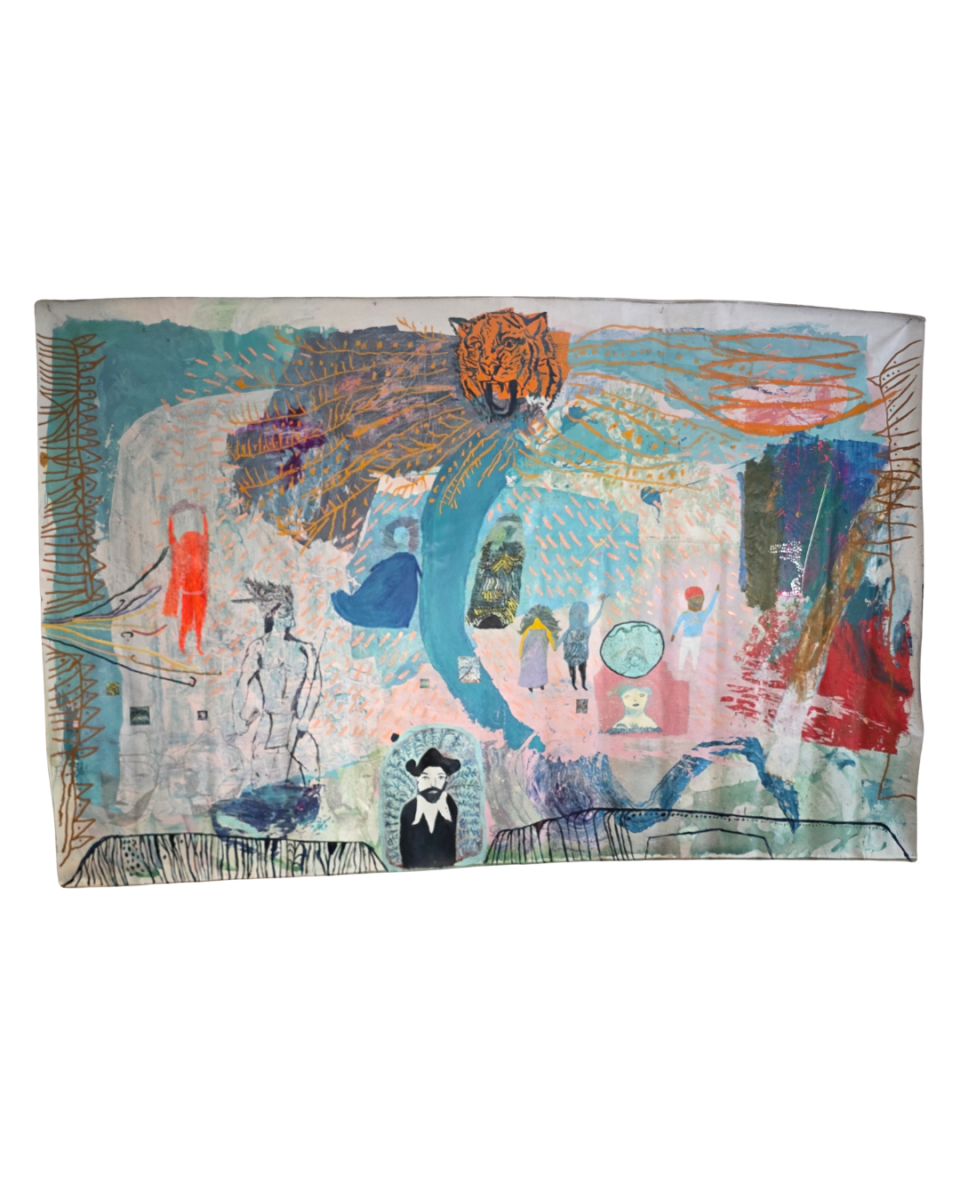

In this exhibition Samuel explores the narrative and interpretative potential of contemporary painting and drawing, in dialogue with Caribbean oral traditions. He also engages with ceramics as a way of constructing allegorical objects that reflect on history, identity, migration, and systems of meaning.
The work of Samuel Sarmiento functions as both a historical record and an exercise in contemporary imagination and fiction. Much like the ancient travel logs that circulated images of exotic animals—some exaggerated and others based purely on descriptions—Sarmiento revives the tradition of “mediated observation.” Examples of this include the famous rhinoceros by Albrecht Dürer (1515) or the human-featured lions of Hans Baldung (1520), where elephants and giraffes were depicted as creatures from distant, mythical worlds.
Today, Samuel Sarmiento presents his own collection of birds, turtles, and caimans. In his work, macaws and troupials visit us reinterpreted by his brushstroke, transforming into time capsules that bridge the gap between myth and reality.
Story: At the beginning of time, birds emerged from the sea; they were fish, weary of swimming, who decided to try their luck in the air. In those days, both the sky and the feathers of all birds were the same deep blue.
With the arrival of the seasons, the birds began to migrate to escape the cold. However, a problem arose: since they were the exact same color as the sky, they could not see one another and constantly collided while in flight. To prevent these accidents, the birds decided to adorn their feathers with bright and varied hues. This is how birds developed their colorful plumage, allowing them to distinguish themselves from one another and fly in an orderly fashion toward their destinations.